
Stories Behind the Woodwork at St. Paul
The wood throughout St. Paul has stories to tell—if you know where to look.
If you stand directly in front of the pulpit in the Sanctuary and follow the grain on the front panel, you will notice something unexpected. Where four pieces of veneer come together, a faint cross naturally emerges from the wood. It was never carved or painted; it appears entirely through the precise alignment of the wood grain. That subtle cross is just one chapter in a larger story of faith, stewardship, and a God-given gift used to serve the church.
An Unexpected Opportunity
Like many meaningful stories, this one began with an unexpected challenge. After water damage in the Sanctuary prompted repairs, church leaders saw an opportunity to replace the pulpit. They turned to Martin Grunow, a congregation member whose exceptional woodworking skills were already well known. Working alongside other church members, Martin helped craft the pulpit that stands at the center of worship today. His careful alignment of the wood grain allowed the subtle cross to emerge naturally—a quiet detail reflecting the purpose of the pulpit as a place where God's Word is proclaimed.
Giving New Life to History
Years later, another opportunity arose to preserve a piece of St. Paul's history. When the cedar elm tree that had stood in front of the church for many years was scheduled to be removed, someone asked a simple question: Could it become something more?
The answer can be found throughout the church today.
Martin transformed the salvaged wood into pieces that continue to welcome, support, and serve the congregation. The cedar elm became tables and chairs outside the Sanctuary, the large welcoming table that greets visitors in the New Life Center, and three processional crosses.
Even after those projects were complete, the tree's story wasn't finished. Working alongside a couple of other church members, Martin helped craft the remaining wood into cross necklaces that were distributed during a church prayer walk. The leftover lumber also became custom votive tea light holders used during one of St. Paul's milestone celebrations.
What once shaded the church grounds now continues to serve the congregation in new ways—a lasting reminder that even after one chapter ends, God can use what remains for another.
The Work of an Everyday Disciple
Martin's craftsmanship can also be found in other areas of the church. In addition to the pulpit and projects created from the cedar elm, he built the balcony handrail, the table supporting the tech equipment in the balcony, the decorative woodwork surrounding the organ pipes, and the wooden valences framing the banner and projection screen at the front of the Sanctuary.
While every project serves a practical purpose, each one also reflects something deeper. Martin approaches every piece with a desire to honor God through his talents. His service beautifully illustrates one of St. Paul’s core values: Everyday Disciples.
God uses each of us in different ways. For some, it is teaching, singing, or working with children. For Martin, ministry happens in a workshop. His tools, precise measurements, and skilled hands have become an integral part of the place where generations gather to worship.
The next time you are at St. Paul, take a closer look. Notice the faint cross in the pulpit, run your hand along the balcony rail, and pause at the table in the New Life Center. You may discover that some of the church's stories have been hiding in plain sight all along.
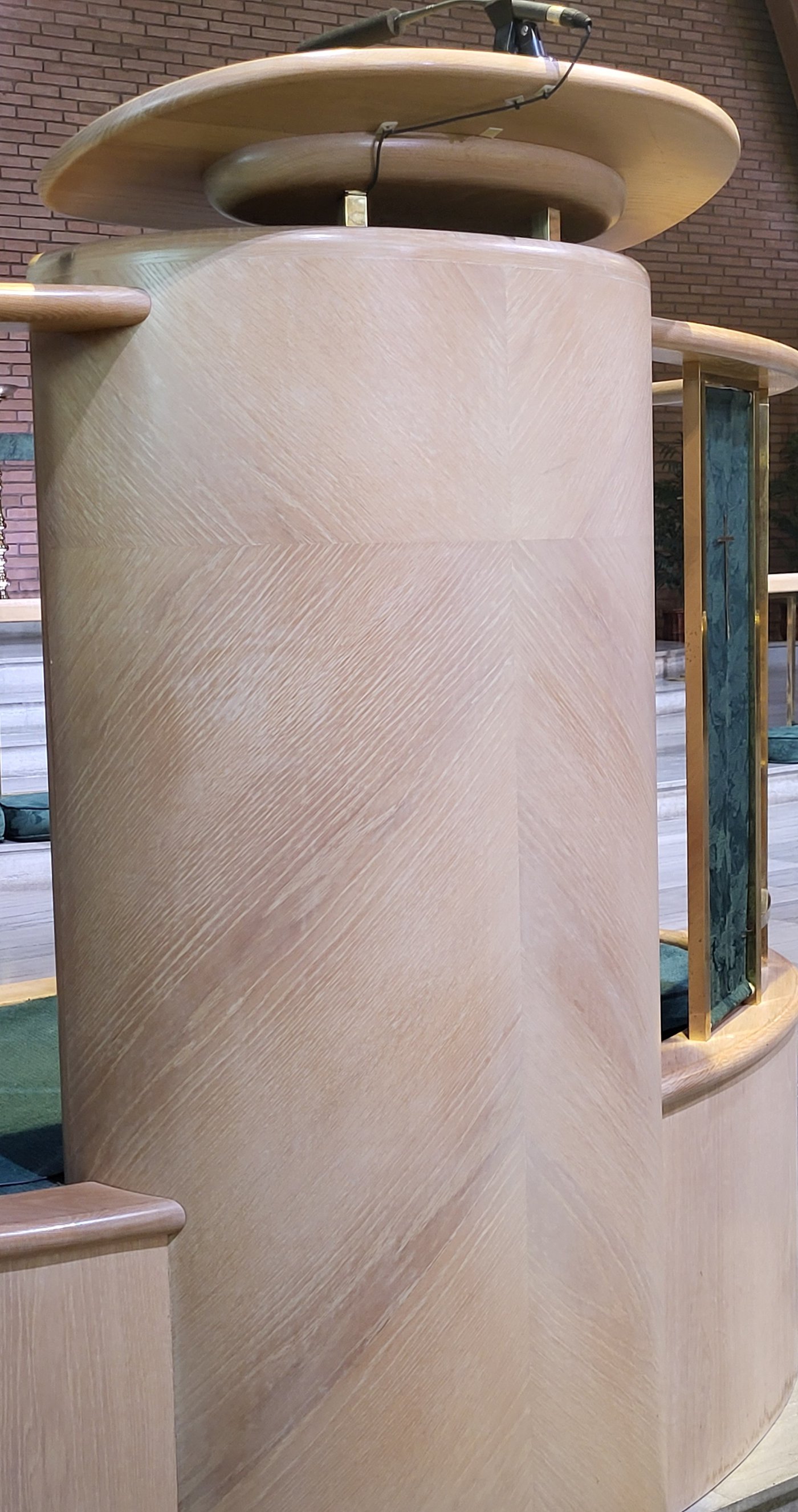 A subtle cross naturally emerges where four pieces of wood veneer meet on the front panel of the Sanctuary pulpit.
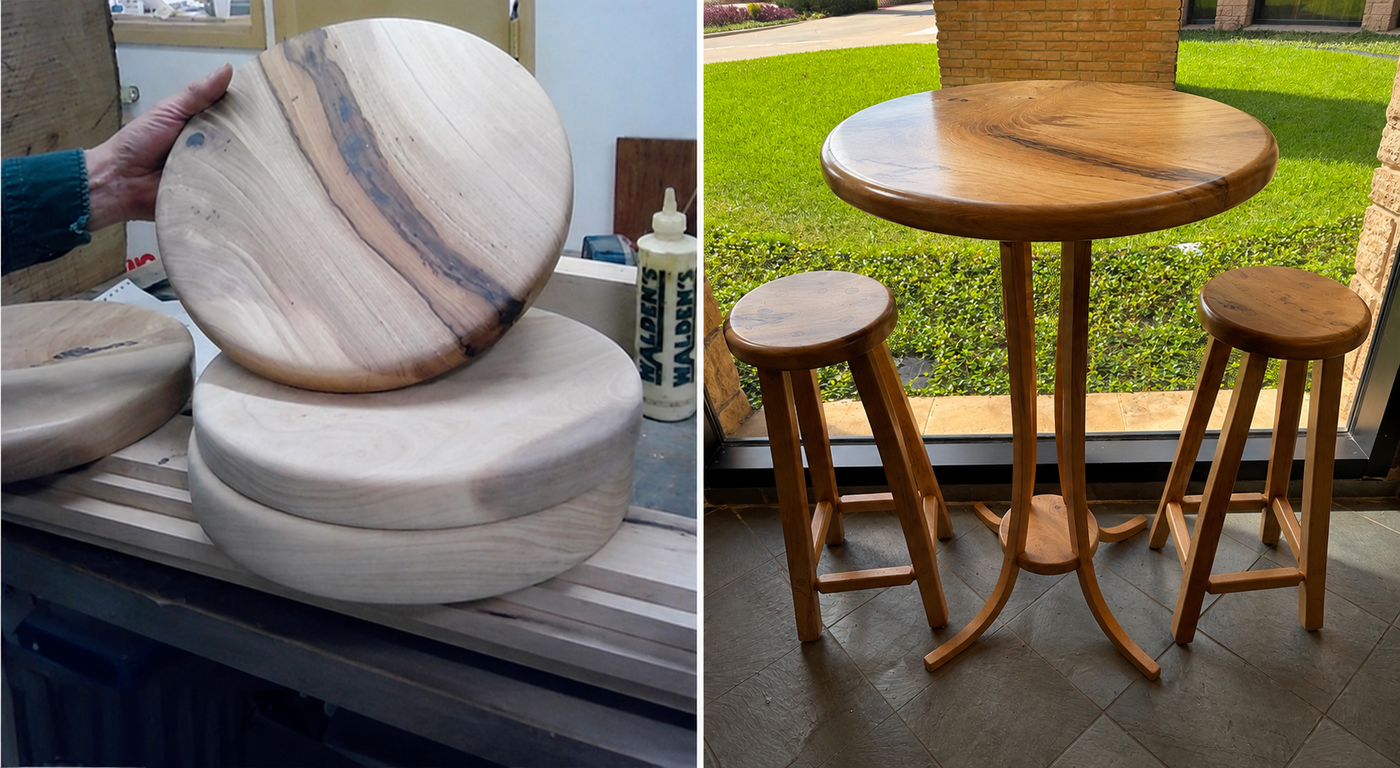 Martin Grunow prepares a stool top, shaping salvaged cedar elm into new furniture for outside the Sanctuary.
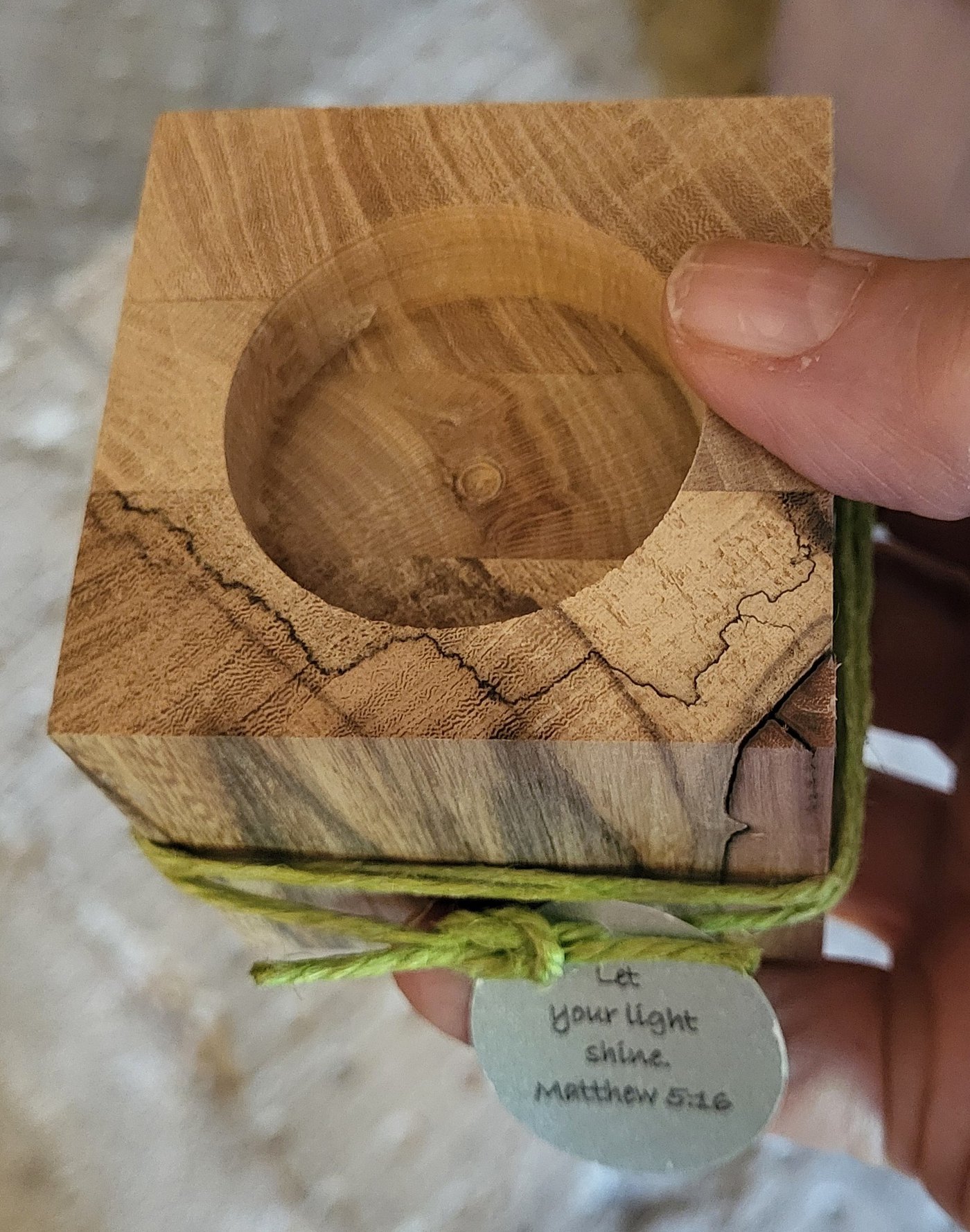 A tea light holder beautifully fashioned from the remaining lumber of the cedar elm tree that once stood in front of the church.
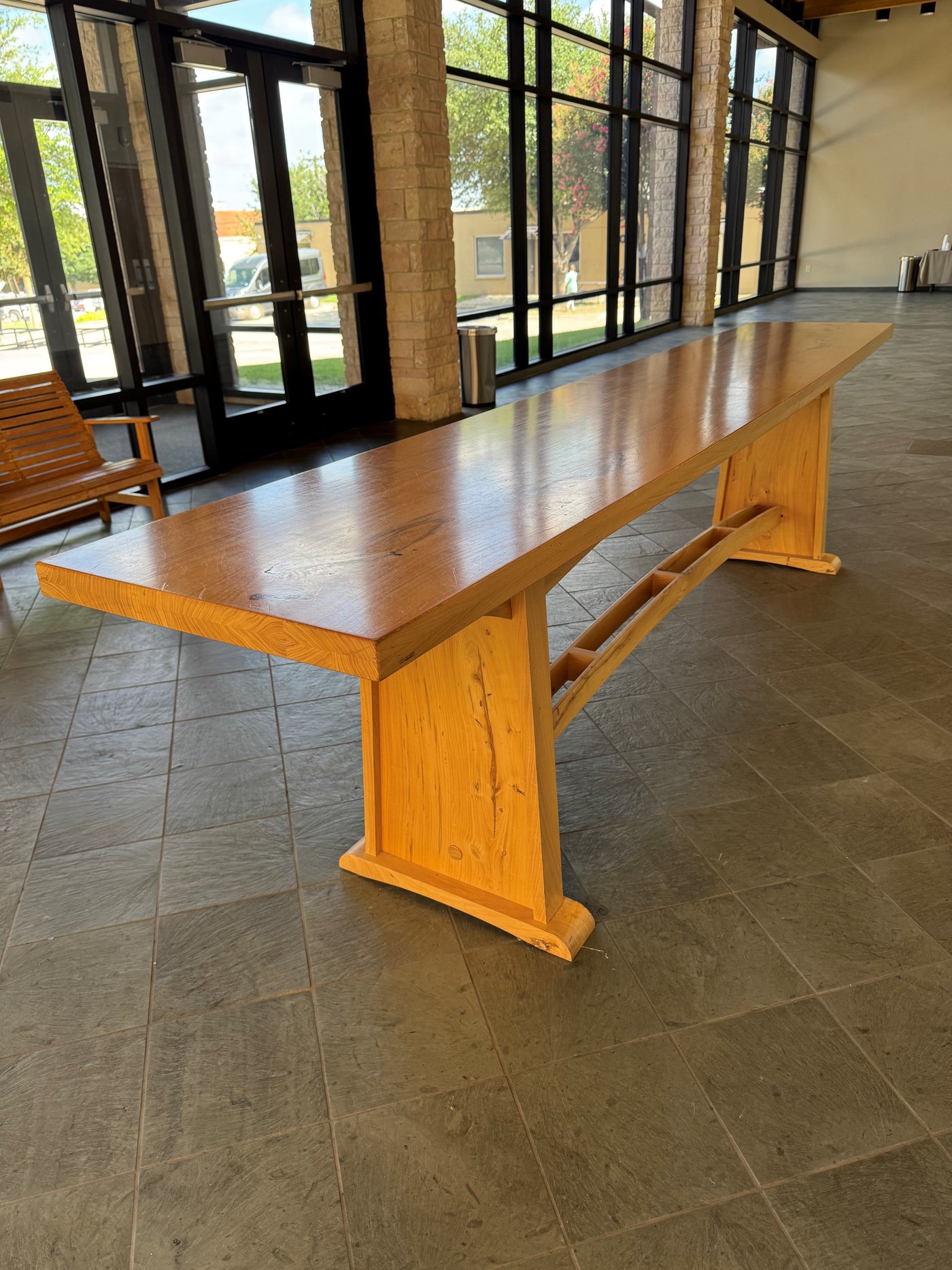 The large, welcoming table built by Martin Grunow that greets visitors as they enter the New Life Center foyer.